Home
 Home
Home 

International Symposium on “The Shanghai Spirit and the Power of Youth in Action” Successfully Held in Xi’an — Jointly Building a New Platform for SCO Youth Cooperation
Thu, Sep 17 2026 16:05
From November 14 to 15, the International Symposium on “The Shanghai Spirit and the Power of Youth in Action” was held at Northwestern Polytechnical University (NPU). More than 100 experts, scholars, youth representatives, faculty members, and students from Shanghai Cooperation Organization (SCO) member states and observer countries — including China, Russia, Kazakhstan, Kyrgyzstan, Tajikistan, Uzbekistan, and Belarus — gathered to discuss the vital role of youth in promoting regional sustainable development.
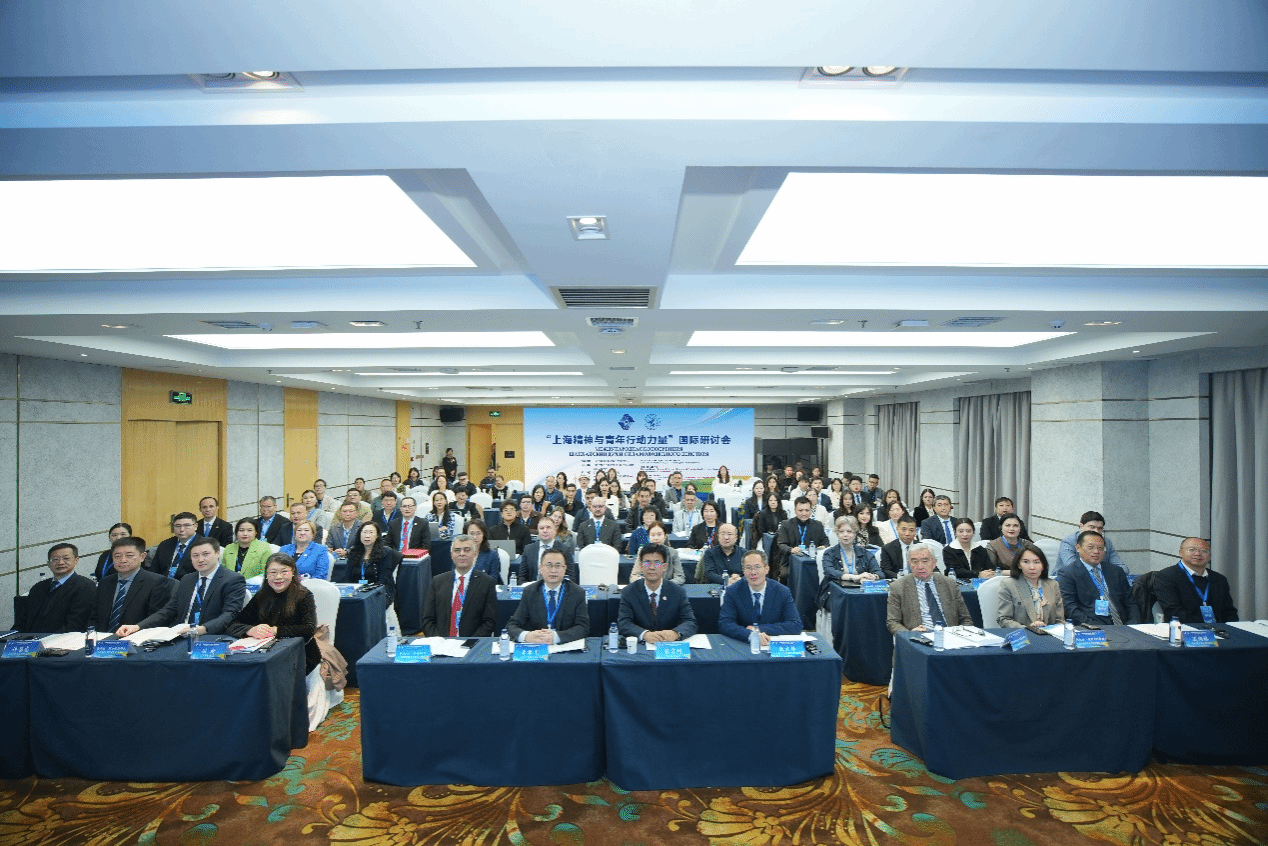
The opening ceremony was chaired by Professor Sun Yu, Dean of the School of Foreign Languages at NPU. In his opening remarks, Zhang Fuli, Vice President of NPU, emphasized that youth are a key force in inheriting and practicing the “Shanghai Spirit” and transforming it into tangible productive capacity. As a “Double First-Class” university renowned for its strengths in aeronautics, astronautics, and marine engineering, NPU has consistently been committed to building platforms for young people to exchange ideas, pool strengths, and seek cooperation. He noted that youth represent the future of the SCO and should strengthen exchanges and cooperation, actively respond to the challenges of the digital era, and jointly promote regional peace, development, and prosperity. Sun Zhuangzhi, Director of the Institute of Russian, Eastern European and Central Asian Studies of the Chinese Academy of Social Sciences; Zhang Wenwei, Deputy Secretary-General of the SCO Good-Neighborliness, Friendship and Cooperation Commission; and Evren Rutbil, Director of the UNESCO International Institute for Central Asian Studies, also delivered speeches. They elaborated on the strategic value of youth cooperation within the SCO framework and provided valuable insights into building bridges for mutual learning among civilizations through youth engagement.
More than 20 experts and scholars conducted in-depth discussions on themes such as “Youth Power: Sustainable Development and Cooperation in the SCO” and “Empowerment through Science and Education: Youth Innovation Cooperation and Skills Transformation.” During three parallel forums, participants exchanged views on topics including “Historical Mutual Learning: Global Civilizational Dialogue from a Youth Perspective,” “Youth in Action: Building Sustainable Humanistic Bonds,” and “Review and Outlook: Generation Z in Building a Shared SCO Home.” The discussions covered multiple dimensions such as Silk Road cultural communication, ecological governance practices, youth policy innovation, and pathways for scientific and technological cooperation, demonstrating the diverse perspectives of SCO youth in regional governance.
Throughout the symposium, a variety of exchange activities enabled participants to experience the unique charm of Chinese culture, vividly illustrating friendly interactions and mutual learning among civilizations within the SCO family. Representatives from the China Academy of Chinese Medical Sciences were specially invited to set up an exhibition and experiential zone for traditional Chinese medicine, offering interactive demonstrations such as pulse diagnosis, acupuncture, and scraping therapy. In addition, a Chinese inheritor of the Manas epic performed live chanting, further enriching the cultural atmosphere of the event.
The symposium was jointly organized by the Institute of Russian, Eastern European and Central Asian Studies of the Chinese Academy of Social Sciences and Northwestern Polytechnical University, and co-hosted by the School of Foreign Languages of NPU and the Shanghai Cooperation Organization Research Center of the Chinese Academy of Social Sciences, among others. The SCO Good-Neighborliness, Friendship and Cooperation Commission served as the guiding organization.